
In this article
- What "Legal Gray Zone" Actually Means Here
- Where Retreats Currently Operate Legally
- Why the Legal Status Matters for the Attendee
- The Vetting Gap
- Real Risks That Don't Get Asked About
- Informed Consent: What a Responsible Retreat Looks Like
- Red Flags Worth Walking Away From
- Decision Framework for Someone Considering a Retreat
Psychedelic retreats have moved from a small subcultural corner into a global travel industry. Tens of thousands of people now travel each year to attend psilocybin, ayahuasca, ibogaine, or 5-MeO-DMT ceremonies, often at significant cost, often across international borders, often in jurisdictions where the legal status of what they are doing is far less clear than the retreat's marketing copy suggests. The phrase "legal gray zone" gets used loosely in this context. It can mean decriminalized, legal-but-restricted, legally untested, locally tolerated but federally illegal, or simply unenforced. Each of those conditions has very different consequences for the person attending.
This article is a harm-reduction primer. It covers the actual legal status of psilocybin, ayahuasca, and other psychedelics at retreat destinations as of mid-2026, the risk categories that legitimate marketing rarely surfaces, and the questions a prospective attendee can ask before booking. It is not a buyer's guide. We are not naming specific retreat operators, recommending destinations, or arguing for or against attending. The aim is to make sure that the decision, if it is made, is made with eyes open.
What "Legal Gray Zone" Actually Means Here
Several distinct legal conditions get lumped under the phrase "legal gray zone," and the difference between them matters more than the marketing of any retreat will acknowledge. Decriminalized means that possession of a small amount for personal use is the lowest law enforcement priority and rarely results in arrest, but it is still technically illegal under state or federal law. Legal means the substance is permitted for the use described, typically inside a licensed facility, with a licensed facilitator, in a regulated jurisdiction. Unregulated means the substance is not specifically illegal but there is no government framework authorizing or supervising its use, so consumer protections and quality controls are essentially zero. Illegal means it is a criminal offense to possess, distribute, or use outside narrow research or religious exemptions.
These distinctions are not hairsplitting. In a decriminalized jurisdiction, an attendee can in principle be cited or arrested, especially if combined with other factors. In a legal jurisdiction, an attendee inside a licensed service center has clear legal cover; outside that facility, they do not. In an unregulated jurisdiction, a bad outcome from a contaminated substance or an unqualified facilitator produces no recourse. The retreat industry markets all four of these conditions under the same warm language about "ancient traditions" and "safe container." The attendee's job is to know which one they are actually buying into.
Where Retreats Currently Operate Legally
Two US states have created legal, regulated supervised-use pathways for psilocybin. Oregon's Measure 109, passed by voters in 2020 and operational since 2023, licenses service centers where adults can consume psilocybin under the supervision of a state-licensed facilitator. The product cannot be taken home. Colorado's Proposition 122, passed in 2022, goes further: it decriminalizes personal possession and creates a "healing centers" framework that began licensing operators in 2024 and 2025. Both states maintain publicly searchable license registries. Both prohibit retail sales of microdose quantities. Both exclude other psychedelics (ayahuasca, MDMA, ibogaine, mescaline) from the legal pathway. Anyone attending a psilocybin retreat in Oregon or Colorado is doing something genuinely legal under state law, within the licensed context, but still federally illegal, and is paying for it accordingly.
A handful of US cities have moved psilocybin and other natural psychedelics toward the bottom of the enforcement priority list: Denver (2019), Oakland (2019), Santa Cruz (2020), Seattle (2021), Ann Arbor (2020), and Detroit (2021). Decriminalization at the city level does not change state or federal law. It tells the local police department not to spend resources on personal-use possession cases. In practice, an attendee returning from a retreat in one of these cities is in a more lenient local environment, but is not in a legal one. The federal jurisdiction over airline travel and customs is unaffected.
Outside the United States, the legal picture is varied and often oversimplified. The Netherlands permits psilocybin truffles (the sclerotia of the same mushroom that produces psilocybin fruit bodies) and has a long-established retreat ecosystem, but psilocybin itself remains a controlled substance, and the truffles are tolerated rather than fully regulated. Jamaica, Costa Rica, and several Caribbean jurisdictions do not prohibit psilocybin in their national drug laws, and retreat operators there operate in a legally permissive but largely unregulated environment. Peru officially recognizes ayahuasca as part of its cultural heritage, which provides some legal cover for ceremonies involving indigenous practitioners but does not extend to commercial operators. Mexico does not schedule psilocybin federally; the legal status varies by state and by enforcement practice. Brazil has had a national policy permitting ayahuasca in religious contexts since 2010, after a federal review found insufficient evidence of harm to justify prohibition.
The Religious Freedom Restoration Act has been used to protect two specific ayahuasca churches in the United States. The Supreme Court ruled in 2006 in Gonzales v. O Centro Espirita Beneficente Uniao do Vegetal that the UDV church may use ayahuasca in its ceremonies despite the federal scheduling of DMT. The Santo Daime church has won similar protections through litigation. These exemptions cover specific religious organizations, not ayahuasca use in general. They do not extend to a retreat marketed as "ceremony." Operating outside these two churches, US ayahuasca use is federally illegal, regardless of how the program frames itself.
Why the Legal Status Matters for the Attendee
The most commonly missed risk is re-entry. A retreat attendee in Jamaica or Mexico who consumed psilocybin, ayahuasca, or any other federally scheduled substance is returning to a jurisdiction where that substance is illegal. The relevant question is what happens at the airport, not what happened in the retreat. US Customs and Border Protection operates under federal jurisdiction, and federal scheduling of psilocybin, DMT, MDMA, and mescaline does not change based on where the substance was consumed. In practice, customs screening rarely includes a substance test on returning travelers, and the realistic risk of arrest at the border for personal use is low. But "rarely" is not "never," and the consequences when it does happen are serious: federal drug possession charges, loss of global entry or TSA precheck, professional consequences for anyone in a regulated field.
A more common border issue is the residue. Ayahuasca brewed in country, brought back as a small amount of liquid, or even as fabric stained with ceremony tea has produced customs stops. The legal exposure in such cases is real and well-documented. Psilocybin truffles carried home from the Netherlands have produced the same outcome. The retreat operator's "you will be fine" reassurance at the airport is not a legal opinion. The attendee's posture at customs is their own responsibility.
There is also the question of who else knows. Medical records, employer drug testing, professional licensing, child custody proceedings, and immigration applications can all surface prior psychedelic use in ways that an attendee has not thought through. A retreat that is legal where it takes place can produce downstream legal exposure that the attendee did not consider. Harm-reduction planning includes thinking through who might find out, and what they might do with the information.
The Vetting Gap
The retreat industry, outside the small Oregon and Colorado licensed contexts, has no required certification for who calls themselves a facilitator. There is no minimum training hour requirement, no standardized screening protocol, no continuing education mandate, and no government registry that an attendee can check. Anyone who can rent a property and find a customer can call themselves a retreat operator. The barrier to entry is effectively zero, and the incentive to overstate qualifications is high, since the market rewards confident marketing more than verifiable training.
This is not a marginal concern. Documented cases of sexual assault by ceremony leaders at ayahuasca and other plant-medicine retreats have appeared in investigative reporting over the last decade. The facilitator-participant power dynamic during an extended, disorienting, sometimes nonverbal experience is real, and the supervision gap is real. The 5-MeO-DMT toad medicine space has had its own quality control problems, including documented use of synthetic analogs sold as the natural compound. The ibogaine space has documented cardiac-arrest deaths at unregulated clinics, almost always associated with inadequate medical screening.
The market signal here cuts the wrong way. Operations that invest in real medical screening, transparent facilitator training, smaller group sizes, and follow-up support cost more and look less polished than operations that prioritize a smooth marketing surface. The attendee evaluating retreat options by website, Instagram presence, and price will tend to choose against the safer operators.
Real Risks That Don't Get Asked About
The standard pre-booking conversation tends to focus on the experience itself. The risks worth asking about are downstream of it. Psychiatric medication interactions are the largest medical category. Ayahuasca's MAOI compounds interact dangerously with SSRIs, SNRIs, tricyclic antidepressants, lithium, tramadol, and many other psychiatric medications, with the worst-case outcome being serotonin syndrome, which can be fatal. A retreat that does not specifically ask about current medications, past medications, and pending medication changes is not adequately screening. A retreat that asks but accepts a verbal "I'm clean" without documentation or a washout period supervised by a physician is also not adequately screening. The same is true of psilocybin interactions with lithium and certain cardiac medications.
Undisclosed group size is another common gap. Marketing materials often feature a single participant or a small pair, while the actual dosing room contains ten, fifteen, or twenty people with one or two facilitators. The ratio that supports meaningful supervision in a high-dose session is closer to one facilitator per three to four participants, with additional staff for medical and integration support. Group sizes above twelve at the moment of dosing, with fewer than two facilitators per group, are a meaningful red flag.
Substance sourcing is rarely disclosed. Operators using known, tested material (psilocybin from a licensed cultivator in Jamaica, ayahuasca brewed by a known church or indigenous organization, ibogaine from a documented supplier with certificates of analysis) typically do not advertise it because it is not the marketing story. Operators using whatever they can source cheaply rarely volunteer the information either. The attendee who does not ask is gambling on the operator's sourcing discipline. Adulterated or misidentified plant material is a real harm category, particularly in the ayahuasca and toad-medicine spaces.
What the retreat website claims and what actually happens on the day can diverge significantly. Prep calls can be replaced by email questionnaires. Medical screening can be replaced by a checkbox. Integration support can be replaced by a one-line suggestion to "journal." The marketing copy sets expectations the operation does not actually meet. The attendee who has paid a nonrefundable deposit has reduced leverage to insist on what was promised.
Enjoying this? Subscribe free.
Every Tuesday: psychedelic science, policy, and culture, decoded for humans.
You'll also get our free Top 10 Psychedelic Books guide.
You're in! Redirecting to your free guide...
Informed Consent: What a Responsible Retreat Looks Like
Some retreats do this work well, and the markers are recognizable. Medical screening is conducted by a clinician or by a clearly-trained facilitator using a structured intake, and it covers psychiatric history (including past episodes, family history of psychosis, current symptoms), medications (including recent changes), cardiac history, pregnancy, prior psychedelic experience, and the reason for attending. Vague answers or pressure to skip screening are warning signs. A real screening takes at least an hour and often two.
Named and verifiable facilitator training matters. A responsible retreat can name the lineage its facilitators trained in, the hours of supervision they completed, the continuing education they maintain, and the supervisor they go to for difficult cases. "Years of experience" without specifics is not enough. "Trained with the Multidisciplinary Association for Psychedelic Studies" or "completed the California Institute of Integral Studies psychedelic-assisted therapy program" or a named apprenticeship with a documented indigenous tradition is meaningfully different from no documentation at all.
Integration support is built into the program, not sold as an add-on. The dosing session is not the therapy. The processing afterward, in the weeks that follow, is where much of the benefit, and much of the harm, gets metabolized. Programs that end at the airport are selling an experience, not a therapeutic model. Programs that include at least two integration sessions, ideally with the same facilitator, ideally over the month after the ceremony, are taking the work seriously.
Transparent pricing, transparent substance sourcing, and transparent risk disclosure are baseline. A retreat that does not publish its pricing, that cannot describe where its compounds come from, or that does not disclose known risks (cardiac events, psychiatric decompensation, drug interactions) in writing is not meeting the bar. Informed consent, in the legal sense, requires that the person consenting has the information. A retreat that skips that disclosure is asking the attendee to consent in the dark.
Red Flags Worth Walking Away From
Pressure to decide quickly is the most common. A legitimate program will give an attendee time to consider, to consult their physician, and to discuss with family if they wish. An operator that pushes a deposit within 24 or 48 hours, that offers "this price is only available today," that creates urgency around a limited number of spots, is selling. The decision to take a high-dose psychedelic is not a decision that benefits from being rushed.
No medical screening, or screening that is conducted entirely by a non-clinical staff member using a one-page form, is a serious red flag. The list of medications and conditions that matter is well known and well documented. A retreat that is not asking the questions is not protecting the attendee.
No integration support, or integration support sold as a paid add-on after the ceremony, signals that the operator does not see the work as ongoing. The post-ceremony period is where difficult material often surfaces. A program that abandons the attendee at the airport is not prepared for the cases where the experience destabilizes rather than supports.
Vague or unverifiable lineage is another marker. "Trained in the Shipibo tradition" without a specific teacher, a specific apprenticeship, a specific number of years, is a marketing phrase rather than a credential. Indigenous traditions have named teachers, named ceremonies, and named lineages. A facilitator who cannot name theirs may have trained briefly or not at all.
Facilitator-led group sizes above twelve at dosing, with only one or two facilitators, exceed the supervision ratio that supports meaningful participant care in a high-dose session. Larger groups are not always irresponsible, but the program should explain how it staffs them. If the explanation is "we have lots of helpers," that is not adequate.
Retreat websites that display only glowing testimonials, with no description of how the program handles difficult outcomes, are showing the marketing surface rather than the program. Real programs have had medical events, psychiatric decompensations, and group conflicts, and they have documented protocols for handling them. A retreat that has only ever had perfect outcomes has either been operating for a very short time or is not telling the truth.
The absence of a contingency plan for psychiatric emergency is a final, decisive marker. A responsible program has a relationship with a local physician, knows the location of the nearest hospital, has transportation arranged, and has a written protocol for what happens if a participant becomes a danger to themselves or others. A program that has not thought this through is one adverse event away from a catastrophe.
Decision Framework for Someone Considering a Retreat
Three questions, asked honestly, will surface most of the relevant considerations before any money changes hands. First, why now? The reason for attending matters. A person with a specific therapeutic goal, who has consulted their physician, who has tried conventional treatment and hit a wall, who has researched the legal and medical landscape, is in a different posture than a person who saw a friend's Instagram post and wants to try it themselves. Neither motivation is invalid, but the second motivation does not justify the cost, the risk, or the legal exposure of a retreat.
Second, what is the actual legal status where this retreat operates? Look it up. The Oregon Health Authority publishes a list of licensed service centers. The Colorado Natural Medicine Division publishes a list of licensed healing centers. The retreat's marketing language will be smooth. The government registry will be specific. If the registry does not exist, that is the answer.
Third, what happens if something goes wrong? Who is the supervising physician? What is the protocol for a participant in psychiatric crisis? What is the refund policy if the program has to send someone home early for medical reasons? A responsible program has thought through these questions and can answer them. An operator who deflects is telling you what their contingency planning is worth.
The Oregon Measure 109 pathway and the Colorado Proposition 122 pathway are the closest things currently available in the United States to a regulated, supervised psychedelic experience. They are not perfect. They are expensive. They are limited to psilocybin. They do not include ayahuasca, MDMA, ibogaine, or 5-MeO-DMT. But they are the only US options that come with verifiable facilitator licensing, real medical screening, and a state regulatory backstop. For psilocybin specifically, attending a licensed service center in Oregon or Colorado is meaningfully safer than attending an unregulated retreat, even one with good intentions.
For other compounds, the decision is harder. Ayahuasca, ibogaine, and 5-MeO-DMT are not available through any US legal pathway. People who decide to attend ceremonies using these substances are, by definition, attending an unregulated or extralegal operation. The harm-reduction calculus in that case is to choose the most rigorously screened, most thoroughly documented, most transparent operators, to bring a sober companion if at all possible, to disclose all medications and conditions fully, and to have a clear plan for what happens if the experience destabilizes. The honest assessment is that, for these compounds, no current option eliminates the legal and medical risk. The choice is whether the therapeutic goal justifies that risk, and that is a decision only the attendee can make.
The retreat industry's center of gravity is currently in jurisdictions with no regulatory framework. That will change as more US states license programs and as more international jurisdictions clarify their stance. In the meantime, the most informed decision-making is the slow kind. Ask the questions. Wait for the answers. Verify the credentials. Talk to past attendees outside the retreat's curated testimonial set. Talk to a physician who is not affiliated with the retreat. Read the published harm-reduction guidance from organizations that have no commercial relationship with the operator. Then, if the decision is to proceed, proceed with the understanding that the legal gray zone is real, the vetting gap is real, and the marketed safety is not the same as verified safety.
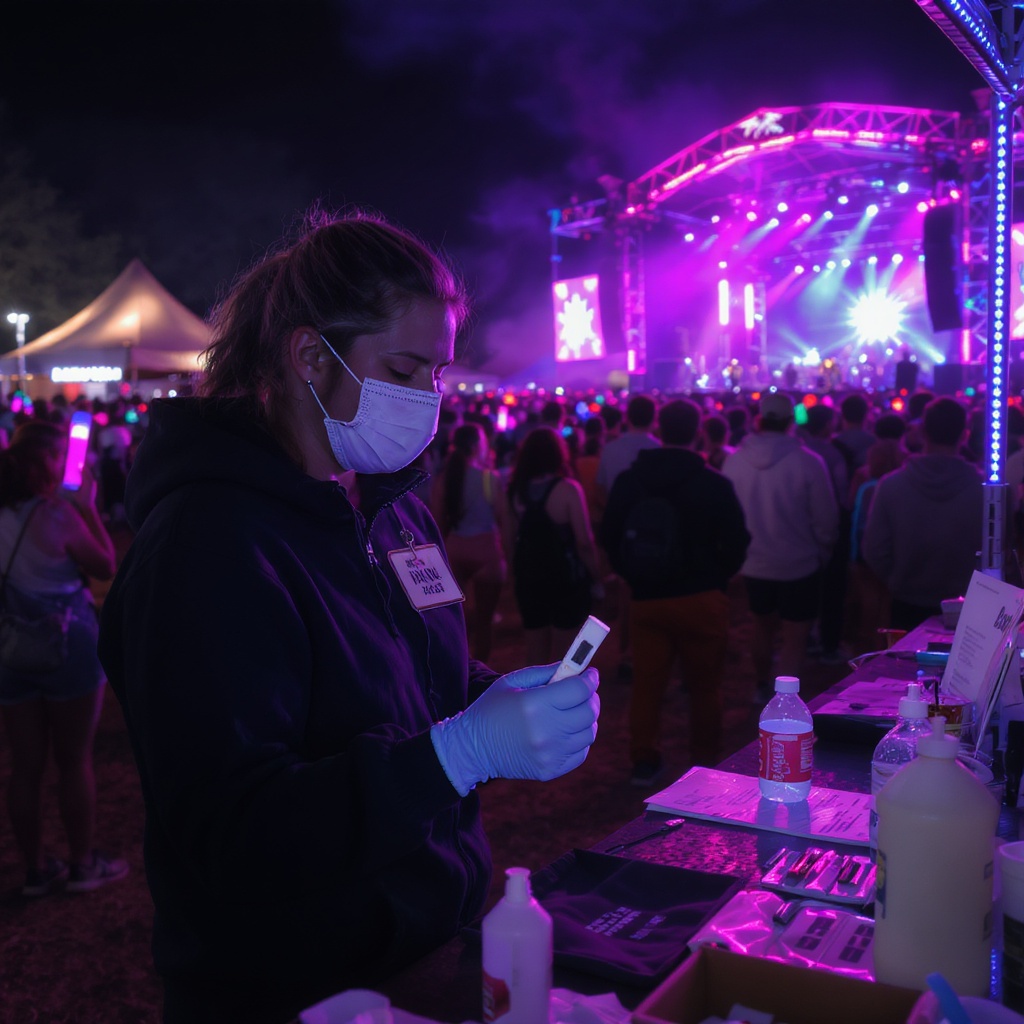
For more on the legal patchwork behind these retreats, see our US psychedelic laws map. For context on the substances most often used in retreat settings, see our explainers on psilocybin, ayahuasca, and microdosing. For harm-reduction practices that travel well to unsupervised or loosely-supervised settings, see our piece on harm reduction at festivals. For the broader cultural context behind the contemporary retreat industry's marketing language, see our articles on Ken Kesey and the Merry Pranksters and Silicon Valley microdosing.
This article is informational and reflects the legal status of these compounds as of August 2026. Laws change, and the difference between decriminalized, unregulated, and legal in any given jurisdiction is narrower and more consequential than marketing copy usually acknowledges. Verify current status with a qualified attorney in your jurisdiction before traveling or attending.
For the published clinical trial evidence behind the compounds most commonly used in retreat settings, the psilocybin research Q&A covers what the randomized trials have shown and what the current regulatory picture looks like.
This article is informational. None of the compounds discussed are legal for general use in the United States, and possession outside approved research settings can carry serious penalties.
Related reading



Enjoying this? Subscribe free.
Every Tuesday: psychedelic science, policy, and culture, decoded for humans.
You'll also get our free Top 10 Psychedelic Books guide.
You're in.
Redirecting to your free book guide...