In this article
- What Are Psychedelics?
- The Main Psychedelic Substances
- Psilocybin (Magic Mushrooms)
- LSD (Lysergic Acid Diethylamide)
- MDMA (3,4-Methylenedioxymethamphetamine)
- DMT and Ayahuasca
- Mescaline (Peyote and San Pedro)
- What Current Research Shows
- Legal Status
- Staying Safe: The Basics
- Set and Setting
- Start Low, Go Slow
- Have a Sober Sitter
- Know Your Substance
- When Psychedelics Aren't Safe
- Integration
- Where to Go From Here
Psychedelics are drugs that change how you see, feel, and think. The word comes from Greek, psyche means mind, delos means reveal. Literally "mind-revealing."
They're having a moment. After decades when they were illegal and basically unstudied, these substances are coming back into mainstream science, medicine, and culture. Johns Hopkins opened a research center in 2019. Multiple states have legalized them. The FDA is reviewing new treatments. And millions of people are asking the same question: what actually are psychedelics?
This guide covers the fundamentals, what psychedelics are, the main substances, what the research actually shows, where they're legal, and the basics of staying safe. Whether you're completely new to this or looking to go deeper, this is your starting point.
What Are Psychedelics?
Most classic psychedelics work by binding to a specific receptor in your brain called 5-HT2A. (A receptor is like a lock on a nerve cell, the drug is the key that fits in.) When the drug binds to that receptor, it changes how your brain's networks talk to each other. Instead of the usual organized, predictable patterns, your brain becomes more flexible and loose. Researchers call this increased "neural entropy." Most people just call it a trip.
Humans have used psychedelic substances for thousands of years. Indigenous cultures across the Americas, Africa, and Asia incorporated psychedelic plants and fungi into spiritual ceremonies, healing practices, and rites of passage long before Western science gave them a name.
The modern era of psychedelic research began in the 1950s and 1960s, when scientists explored these compounds for treating depression, addiction, and anxiety. That research mostly stopped during the War on Drugs. Now, after a 40-year gap, it's back, and the results are getting serious attention.
The Main Psychedelic Substances
Psilocybin (Magic Mushrooms)
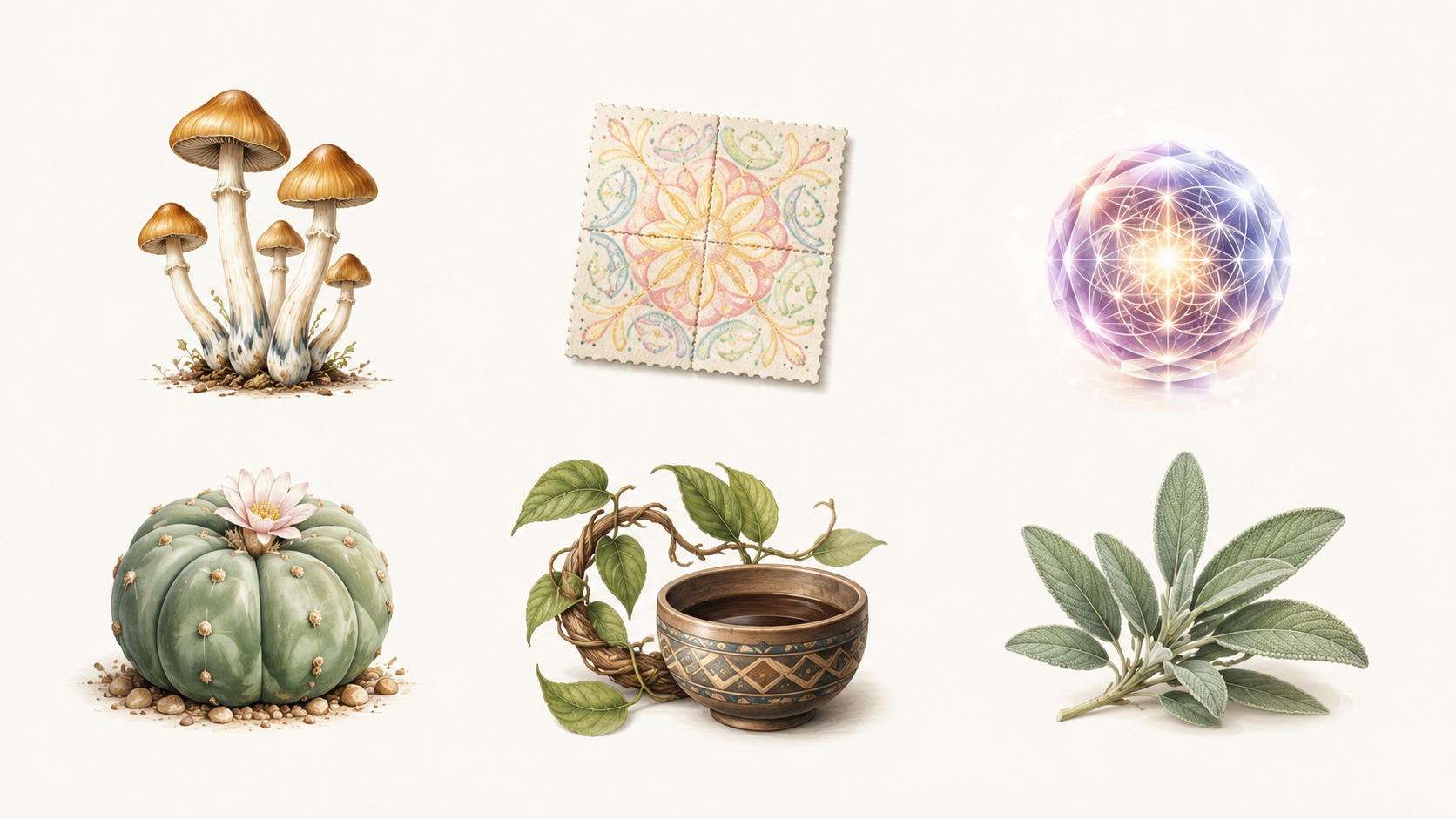
Psilocybin is the active compound found in over 200 species of fungi, commonly known as magic mushrooms. When you eat them, your body converts psilocybin into psilocin, which is what actually produces the effects.
What it feels like: Visual changes (patterns, colors getting more vivid, things looking distorted), emotional depth, introspective thinking, time getting weird, and at higher doses, experiences people describe as spiritual or mystical. Many users report feeling deeply connected to everything.
How long it lasts: 4-6 hours, with effects usually starting 30-60 minutes after you eat it.
What research shows: Psilocybin is one of the most studied psychedelics right now. Johns Hopkins University's Center for Psychedelic and Consciousness Research has published landmark studies showing significant improvements in treatment-resistant depression (depression that doesn't respond to normal antidepressants). The effects last weeks or months after just one or two sessions. Research also shows promise for end-of-life anxiety in cancer patients, helping people quit smoking, and treating alcohol use disorder.
LSD (Lysergic Acid Diethylamide)
LSD was first synthesized in 1938 by a Swiss chemist named Albert Hofmann at Sandoz Laboratories. He accidentally discovered it was psychoactive in 1943 when a tiny amount got absorbed through his skin. That day. April 19th, is now called "Bicycle Day."
What it feels like: Visual distortions and hallucinations, colors and sounds mixing together in weird ways, your thinking speeding up and making weird connections, emotions getting intense, and your sense of self shifting. LSD is super potent, active doses are measured in micrograms (millionths of a gram).
How long it lasts: 8-12 hours, making it one of the longest-lasting psychedelics.
What research shows: LSD was heavily studied in the 1950s and 60s before it got banned. Modern studies are revisiting its potential for anxiety, depression, and cluster headaches. A practice called "microdosing", taking tiny sub-perceptual amounts regularly, has become popular, but the clinical evidence for its benefits is still weak. A lot of the supposed benefits seem to come from people expecting them to work (placebo effect) rather than the drug itself.
MDMA (3,4-Methylenedioxymethamphetamine)
MDMA is technically classified as an "empathogen" rather than a classic psychedelic, but it's become central to the psychedelic therapy conversation. It was originally synthesized in 1912, got used therapeutically in the 1970s, then was banned in 1985.
What it feels like: Emotional openness, enhanced empathy and connection with others, reduced fear, warm feelings, and mild sensory changes. Unlike classic psychedelics, MDMA doesn't typically produce visual hallucinations.
How long it lasts: 3-5 hours for the main effects.
What research shows: MDMA-assisted therapy for PTSD has produced striking results. The Multidisciplinary Association for Psychedelic Studies (MAPS) ran trials showing that about 71% of participants no longer met the diagnostic criteria for PTSD after treatment. The FDA is reviewing MDMA therapy, and it could become an approved medicine within the next few years.
DMT and Ayahuasca
DMT (N,N-Dimethyltryptamine) is a naturally occurring compound found in hundreds of plant species. It's also produced in small quantities by the human body. You can consume it in different ways, and each produces a very different experience.
Smoked DMT: Produces an intensely powerful but brief experience, 15-30 minutes. Users often report meeting seemingly autonomous entities, visiting other "dimensions," and experiences that feel more real than everyday life. It's sometimes called "the spirit molecule."
Ayahuasca: A traditional brew from the Amazon, usually made by combining DMT-containing plants with a vine that contains compounds preventing your body from breaking down DMT. Indigenous peoples have been using ayahuasca for centuries. Now it's attracting international attention.
How long it lasts: Ayahuasca experiences typically last 4-6 hours and often include nausea or vomiting, which many traditions view as part of the healing process.
What research shows: Growing research suggests ayahuasca may help depression, addiction, and trauma. Studies from Brazil and Spain have shown antidepressant effects. Research in ceremonial settings shows psychological benefits for many participants.
Mescaline (Peyote and San Pedro)
Mescaline is a naturally occurring psychedelic found in several cacti, most notably peyote and San Pedro. Peyote has been used ceremonially by Indigenous peoples of the Americas for at least 5,000 years, making it one of the oldest known psychedelics.
What it feels like: Visual enhancement and patterns, feelings of warmth and connection, contemplative thinking, body sensations, and a sense of clarity. Mescaline is often described as producing a more "grounded" psychedelic experience compared to psilocybin or LSD.
How long it lasts: 8-12 hours.
What research shows: Mescaline has received less clinical attention than psilocybin or MDMA, but historical studies and ethnographic reports suggest it has therapeutic potential. The Native American Church has used peyote ceremonially for over a century, and members report it as a cornerstone of healing and spiritual practice. Peyote use is legally protected for NAC members under federal law.
Enjoying this? Subscribe free.
Every Tuesday: psychedelic science, policy, and culture, decoded for humans.
You'll also get our free Top 10 Psychedelic Books guide.
You're in! Redirecting to your free guide...
What Current Research Shows
The past decade has seen a huge resurgence in psychedelic research, with major universities and medical centers leading the way:
- Johns Hopkins University opened its research center in 2019, the first of its kind in the U.S. Their work on psilocybin for depression and addiction has been published in top journals including JAMA and the New England Journal of Medicine.
- Imperial College London's Centre for Psychedelic Research, led by Dr. Robin Carhart-Harris, has pioneered brain imaging studies showing how psychedelics affect brain connectivity, particularly the "default mode network", the brain system associated with your sense of self.
- MAPS (Multidisciplinary Association for Psychedelic Studies) has invested decades and over $100 million in bringing MDMA-assisted therapy through FDA clinical trials for PTSD.
Key findings across the field include:
- Depression: Psilocybin-assisted therapy has shown rapid and sustained antidepressant effects, even in patients who haven't responded to conventional treatments.
- PTSD: MDMA-assisted therapy has demonstrated substantial improvement in PTSD symptoms, including in veterans and first responders.
- Addiction: Psilocybin has shown promise for smoking cessation and alcohol use disorder in clinical trials at Johns Hopkins and NYU.
- End-of-life anxiety: Both psilocybin and LSD have significantly reduced anxiety and depression in patients facing terminal illness.
- Brain plasticity: Psychedelics appear to promote the growth of new neural connections, potentially "rewiring" brain patterns associated with depression, anxiety, and compulsive behaviors.
Important note: These results come from controlled clinical settings with trained therapists, careful screening, and structured preparation and follow-up. The research does not suggest that unsupervised use produces the same outcomes.
Legal Status
The legal landscape for psychedelics is shifting rapidly, but it remains complex and varies significantly by location.
United States
Federal: Most psychedelics remain Schedule I controlled substances under federal law, meaning they're classified as having no accepted medical use and a high potential for abuse. This includes psilocybin, LSD, MDMA, DMT, and mescaline (with a religious exemption for the Native American Church's use of peyote).
Oregon: In 2020, voters passed Measure 109, creating the first legal framework for psilocybin-assisted therapy in the U.S. Licensed service centers began operating in 2023, allowing adults to use psilocybin under the supervision of trained facilitators.
Colorado: The Natural Medicine Health Act (2022) legalized personal use, possession, and growing of psilocybin, psilocin, DMT, ibogaine, and mescaline (excluding peyote) for adults 21+. The state is also developing a regulated access program similar to Oregon's.
Other states: Multiple states have introduced legislation to study, decriminalize, or create regulated access programs for psychedelics. Cities including Denver, Oakland, Santa Cruz, Seattle, Detroit, and others have passed resolutions deprioritizing enforcement.
International
- Netherlands: Psilocybin truffles (a form of the same fungi) are legal and sold in "smart shops."
- Jamaica: Psilocybin mushrooms are not specifically prohibited, and legal retreat centers operate openly.
- Brazil: Ayahuasca is legal for religious use and has been since 1992.
- Portugal: Decriminalized personal possession of all drugs in 2001, though psychedelics are not specifically legalized.
- Canada: Has granted individual exemptions for psilocybin therapy and is developing broader regulatory frameworks.
Laws change frequently. Always verify the current legal status in your specific jurisdiction before making any decisions.
Staying Safe: The Basics
Whether or not psychedelics are legal where you are, harm reduction, the practice of minimizing risks, is essential information. These are evidence-based principles endorsed by public health organizations worldwide.
Set and Setting
"Set" is your internal state, your emotional baseline, your intentions, what you're carrying into the experience. "Setting" is the physical and social environment, who's with you, where you are, whether you feel safe. Both significantly shape how things unfold.
Start Low, Go Slow
If you're new to any substance, begin with a lower dose to understand your sensitivity. Individual responses vary significantly. You can always take more next time; you can't take less once you've started.
Have a Sober Sitter
Having a trusted, sober person present, especially for higher doses or first experiences, provides safety. They can offer reassurance during difficult moments and handle any practical needs.
Know Your Substance
Testing kits can verify that a substance is what it's claimed to be. Organizations like DanceSafe provide testing supplies and information.
When Psychedelics Aren't Safe
Psychedelics are not safe for everyone. Important considerations include:
- Personal or family history of psychotic disorders (schizophrenia, bipolar I)
- Current use of lithium or tramadol (dangerous interactions)
- SSRIs and other serotonergic medications (can reduce effects or create risk of serotonin syndrome with MDMA)
- Heart conditions (most psychedelics temporarily increase heart rate and blood pressure)
- Pregnancy
Integration
What you do after a psychedelic experience matters as much as the experience itself. Integration means reflecting on and making sense of what happened. This can involve journaling, talking with a therapist or trusted friend, or making intentional changes based on insights. Without integration, even powerful experiences may not translate into lasting benefit.
Where to Go From Here
Psychedelics are vast and rapidly evolving. The science is moving fast. The laws are changing. The culture is shifting. Staying informed is the first step, whether your interest is personal, professional, or simply curious.
Dive deeper into specific substances: learn about psilocybin, explore LSD, or understand DMT. Or check out the legal ways to access these substances if you're curious about trying them responsibly.
Related reading

Enjoying this? Subscribe free.
Every Tuesday: psychedelic science, policy, and culture, decoded for humans.
You'll also get our free Top 10 Psychedelic Books guide.
You're in.
Redirecting to your free book guide...