In this article
In 1990, a psychiatrist named Rick Strassman walked into a hospital room at the University of New Mexico and administered an intravenous dose of DMT to a volunteer research subject. It was the first federally approved psychedelic study in the United States in over twenty years.
The subject lost consciousness for a moment, then came back, eyes wide. He described interdimensional beings. He described traveling through space. He described the feeling that what he'd just experienced was more real than anything he'd encountered in ordinary waking life. Then, about fifteen minutes after the injection, he was sitting up in the hospital bed, eating lunch, and describing what had happened in complete sentences.
This is DMT. The experience is brutal in its intensity and over almost before it starts. It's the compound that inspired the phrase "the spirit molecule." It's the active ingredient in ayahuasca. It's reportedly produced by the human body itself. And it remains one of the most poorly understood and fiercely debated substances in psychedelic science.
What Is DMT?
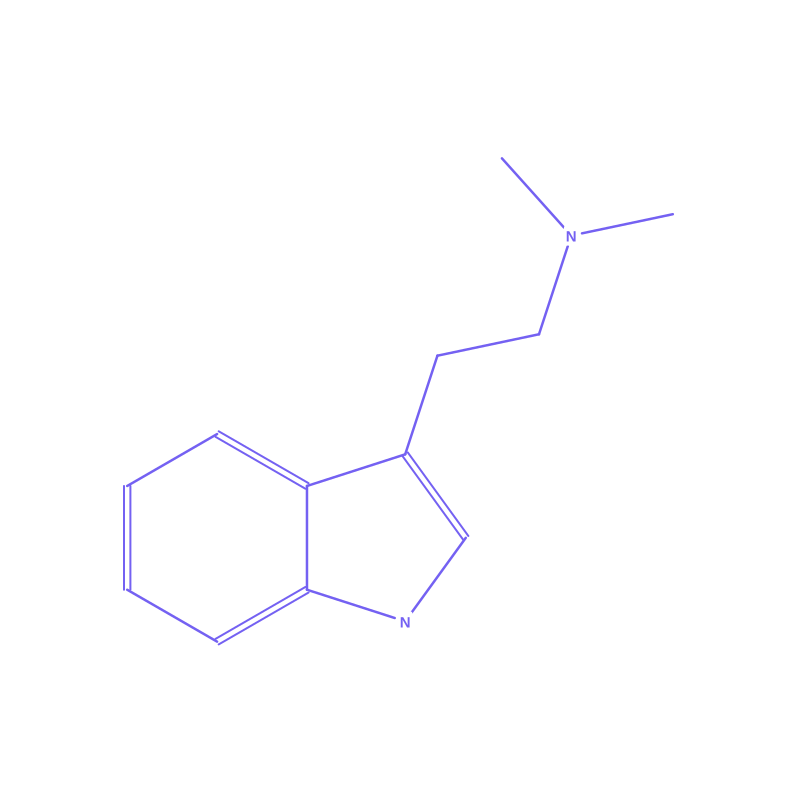
DMT stands for N,N-Dimethyltryptamine. It's a tryptamine, a class of compounds that includes serotonin, melatonin, and psilocin (psilocybin's active form). The basic chemical skeleton appears across the animal and plant kingdoms with striking regularity. DMT specifically shows up in hundreds of plant species and, if the most intriguing hypothesis in psychedelic research is correct, in the human brain itself.
Structurally, DMT is simpler than psilocybin. Where psilocybin carries a phosphate group that requires enzymatic cleavage before it becomes active, DMT can act directly on serotonin receptors, specifically the 5-HT2A receptor, the same target that psilocybin and LSD act on. The complication is that the human body produces monoamine oxidase (MAO), an enzyme that degrades DMT almost instantly when taken orally. This is why smoking or injecting it produces intense effects, the compound reaches the brain before MAO can break it down, but eating DMT-containing plants alone does nothing discernible.
The elegant solution to the MAO problem is, improbably, a vine that grows in the Amazon basin.
Ayahuasca: The Botanical Workaround
Ayahuasca is a brew. The recipe has been known to Amazonian indigenous peoples for centuries, though nobody knows exactly when it was first developed or by whom. The genius of it, and it is genuinely clever, is that it combines two plants that do something remarkable together.
The first plant provides DMT. Psychotria viridis (chacruna) is the most common source, though dozens of DMT-containing plants can serve this role. The second plant is Banisteriopsis caapi, a vine that contains harmala alkaloids, specifically beta-carbolines that act as MAO inhibitors. When you drink the brew, the MAO inhibitors in the vine block your body's ability to break down the DMT from the leaves. The DMT reaches the brain. The experience lasts four to six hours instead of fifteen minutes.
Whoever figured this out, the pairing of a specific vine with a specific leaf to produce a specific effect, did so thousands of years before the concept of a monoamine oxidase inhibitor existed. The traditional explanation is that the plants themselves communicated their compatibility to the healers. The neuropharmacological explanation doesn't make that seem less impressive. It's a sophisticated two-compound delivery mechanism arrived at without biochemistry.
In indigenous Amazonian traditions, ayahuasca is medicine. It has names in different languages, yagé in Colombia, kamarampi in Peru, uni in some communities. Ceremonies are conducted by experienced healers called curanderos or ayahuasceros who spend years learning to work with the brew and to guide participants through difficult experiences. The purpose is healing, physical, psychological, spiritual. The vomiting and diarrhea that often accompany the experience aren't side effects to be managed; they're called la purga, the purge, and are understood as part of the medicine's work.
The past two decades have seen an explosion of Western interest in ayahuasca ceremonies, with retreat centers spreading across Peru, Costa Rica, and the Netherlands, and an underground market of traveling curanderos offering ceremonies across Europe and North America. This rapid commercialization has created serious tensions, between indigenous communities who feel their sacred traditions are being appropriated and monetized, and Western seekers who feel genuinely transformed. It's a version of the same story that unfolded after R. Gordon Wasson wrote about psilocybin in Life magazine in 1957, the story of a healer in Oaxaca whose life was upended by Western curiosity.
N,N-DMT vs. 5-MeO-DMT: Two Very Different Molecules
When people say "DMT," they usually mean N,N-Dimethyltryptamine, the form found in ayahuasca plants and most commonly vaporized. But there's a second compound that shares the name and almost nothing else about the experience: 5-MeO-DMT, or 5-methoxy-N,N-dimethyltryptamine.
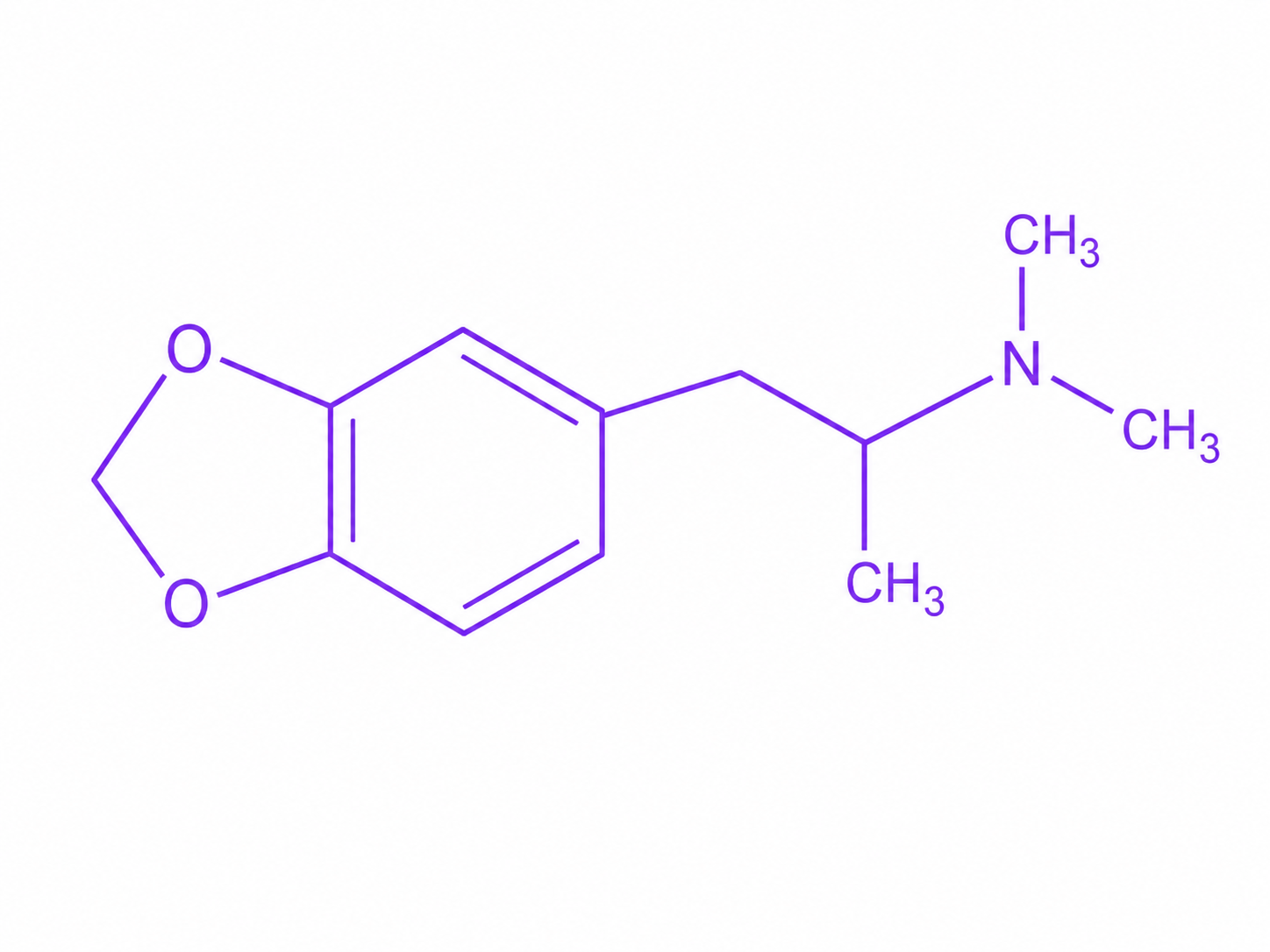
The structural difference is small, a methoxy group added at the 5-position of the indole ring. The experiential difference is enormous.
N,N-DMT experiences are typically characterized by complex visual geometry, encounters with seemingly autonomous entities, and a sense of entering an alternate world that feels curiously consistent across different users. The experience often has an almost narrative quality, things seem to happen, beings seem to communicate, the environment seems to have structure and logic. Users return from it with specific stories.
5-MeO-DMT produces something different: a complete dissolution of self and world. There's typically no geometry, no entities, no landscape. Users describe white light, total ego dissolution, and a sense of merging with everything. Where N,N-DMT is often described as visiting somewhere else, 5-MeO is described as becoming everything. The intensity is, by most accounts, even greater, which is saying something.
5-MeO-DMT is found in several plants and in the venom of the Sonoran Desert toad, Bufo alvarius (now taxonomically reclassified as Incilius alvarius).
The Bufo Alvarius Problem
The Sonoran Desert toad produces a venom containing 5-MeO-DMT that, when collected and dried, can be smoked. The experience lasts about twenty minutes. The demand for toad ceremonies, which proliferated rapidly through wellness and psychedelic tourism circuits, may be threatening the toad population.
Toads are wild animals that don't survive the milking process well, and wild populations don't regenerate fast enough to sustain the demand. Some Mexican states have begun introducing protections. Conservation organizations have raised alarms. And parts of the psychedelic community have been grappling with the obvious tension: a ceremony marketed as healing and transformation that might be driving a wild species toward regional extinction.
The practical alternative is synthetic 5-MeO-DMT, which is chemically identical to the toad-derived compound and sidesteps the ecological problem entirely. Many practitioners have shifted to synthetic. Some haven't, citing cultural tradition, though the toad ceremony itself was popularized primarily in the 1980s and 90s, making it a newer tradition than it's sometimes presented as.
The ecological case for synthetic is strong. The molecules are identical. The toad gains nothing from the ceremony and loses quite a lot.
The Endogenous DMT Hypothesis
Here's where the science gets genuinely strange.
Enjoying this? Subscribe free.
Every Tuesday: psychedelic science, policy, and culture, decoded for humans.
You'll also get our free Top 10 Psychedelic Books guide.
You're in! Redirecting to your free guide...
DMT isn't just found in plants. The human body produces it. It's been detected in human blood, urine, and cerebrospinal fluid for decades. The biosynthetic pathway, the series of enzymatic reactions that convert the amino acid tryptophan to DMT, exists in human tissue. In 2019, researchers at the University of Michigan detected DMT in the living rat brain, including surges during cardiac arrest that briefly exceeded the levels typical of psychedelic doses of externally administered DMT.
This has generated a hypothesis: the human brain may produce DMT endogenously, perhaps in amounts sufficient to produce altered states under certain conditions.
Rick Strassman, who ran the 1990 UNM trials and wrote the influential book DMT: The Spirit Molecule, proposed that the pineal gland might be the primary production site, releasing DMT during deep sleep, near-death experiences, and mystical states. The pineal gland idea has become extremely popular in psychedelic culture, repeated confidently in podcasts and forums as established fact.
Here's what the evidence actually supports: the pineal gland does contain the enzymatic machinery required for DMT synthesis. The Michigan study confirmed endogenous DMT in mammalian brains. But whether the pineal specifically produces psychoactive quantities of DMT under normal or near-death conditions in humans remains unproven. The hypothesis is biologically plausible and scientifically interesting. It is not confirmed.
What does seem clear: DMT is not simply an exotic plant alkaloid. It's a compound the mammalian body knows how to make. What it does with that capability, in what amounts, under what circumstances, with what purpose, is still being worked out.
The Experience
Two routes to DMT, smoked and oral via ayahuasca, are similar enough chemically that they're worth discussing together, but different enough experientially that they produce very different accounts.
Smoked DMT
The onset is immediate. Within seconds of inhalation, users report a rapid visual transformation, complex geometric patterns, then a sense of bursting through a barrier into somewhere else entirely. A buzzing, electronic sound that precedes the full effect has been described by users across different cultures who have never compared notes. At the peak, which arrives within two minutes, the ordinary world is completely gone.
The entity encounters deserve their own discussion. A significant percentage of people who smoke high doses of DMT report meeting beings, often described as elfin, mechanical, insectoid, or alien, who appear to communicate and who sometimes seem to be expecting the visitor. Terence McKenna called them "machine elves" in his famously idiosyncratic characterization. Other users describe the same basic phenomenon using completely different language. Strassman found the encounter theme consistent enough across his 1990 research subjects that he devoted substantial space to it in his book.
What are they? Nobody knows. The honest answer spans a range: at one end, a neurological artifact, the brain pattern-matching under intense chemical stress and generating faces and intentionality because that's what brains do. At the other, something that might require a more interesting explanation. The encounters feel so consistent and so real to people who have them that dismissing them as simple hallucinations doesn't sit right with everyone, including some researchers who've studied the phenomenon seriously. It remains genuinely open.
Then, fifteen to twenty minutes after inhalation, the experience ends. Users return to baseline. There's often a period of quiet awe, then life resumes normally. The brevity is part of what makes smoked DMT so unusual, you've potentially been to the far edge of human consciousness, and you're back in time for lunch.
Ayahuasca
The oral route via ayahuasca is slower, deeper, and considerably less predictable. Onset is 30-60 minutes. The peak can last several hours. The MAOI component means dietary restrictions apply, tyramine-rich foods can cause dangerous blood pressure spikes, and interactions with other medications require careful attention. SSRIs in particular create risk.
Ayahuasca experiences are frequently described as confrontational. Where psilocybin tends toward the introspective and meaningful, ayahuasca ceremonies often produce emotionally turbulent territory, difficult memories surfacing, the brew seeming to go directly after whatever you'd prefer not to examine. The purge is real and common. In traditional contexts, this is by design. The healing isn't comfortable by default.
Cultural context shapes ayahuasca experiences significantly. Indigenous ceremonies are embedded in traditions with specific songs called icaros, specific plants, specific protocols, a container built over generations. Western retreat ceremonies vary enormously in quality, safety, and integrity. The ceremony and the brew are both necessary but neither, on its own, is sufficient.
Modern Research
Ayahuasca research has been building credibility. A 2019 randomized controlled trial in Brazil showed a single session produced rapid antidepressant effects with a large effect size, remarkable for a single-session intervention. Observational studies from the Santo Daime church, a Brazilian religious group that uses ayahuasca sacramentally, show lower rates of substance abuse among long-term members. Research examining long-term ceremonial use has found generally positive psychological outcomes in regular practitioners.
Smoked N,N-DMT has received less systematic clinical attention, the fifteen-minute duration makes it difficult to structure a therapeutic session around, but interest is growing, and Johns Hopkins and other centers have been exploring whether short-duration psychedelics might have specific clinical applications.
5-MeO-DMT has produced some striking preliminary data. Johns Hopkins researchers published a 2019 survey study showing acute and sustained improvements in self-rated anxiety and depression following 5-MeO-DMT experiences. A subsequent survey of naturalistic use found similar patterns. Controlled trials are still in early stages, but the signal is strong enough that they're happening.
Where DMT Fits in the Bigger Picture
DMT is, in one sense, the most extreme end of the classic psychedelic spectrum. Where psilocybin loosens the self and allows unusual cognition and emotion to surface, DMT can remove the self entirely, temporarily, reliably, and in fifteen minutes. The brevity makes it accessible; the intensity makes it irreversible in a particular sense: people who've done it don't tend to undo their understanding of what consciousness can become.
But it's also a molecule so embedded in living biology that "exotic" may be exactly the wrong frame. If the endogenous hypothesis holds up under further study, DMT is something the mammalian brain already knows about, already produces, possibly already uses for something. The ritual context and the pharmacological delivery method may be two different access routes to territory that isn't entirely foreign.
Whether you approach it as biochemistry, as indigenous medicine, as a philosophical puzzle, or simply as an improbably brief journey to somewhere that seems to be somewhere, it's a compound that refuses to be categorized neatly. That's part of why it keeps generating such intense interest among researchers, practitioners, and curious people who want to understand the full range of human experience.
DMT is one compound in a wider psychedelic landscape that includes psilocybin, LSD, MDMA, and mescaline. Its closest relative in the tryptamine family is psilocybin, both work on the same receptor, but they trace very different paths through history and culture.
Related reading
Enjoying this? Subscribe free.
Every Tuesday: psychedelic science, policy, and culture, decoded for humans.
You'll also get our free Top 10 Psychedelic Books guide.
You're in.
Redirecting to your free book guide...